AI Smart Library × “AI Reading Cards”
Creating a gamified reading experience for primary students

Pain Points and Challenges
For many years, the school had been using a traditional library system. While basic circulation functions were stable, the system had clear limitations in supporting e-learning, BYOD devices, and future AI applications, and the upgrade cost–benefit ratio could not meet the school’s expectations. As the school placed increasing emphasis on e‑books and online resources, teachers needed a smart platform that could manage physical books, analyse reading data, and support AI‑driven recommendations; the legacy system could no longer support future development needs.
Solution
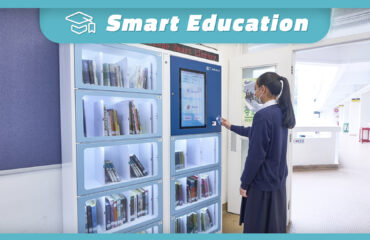
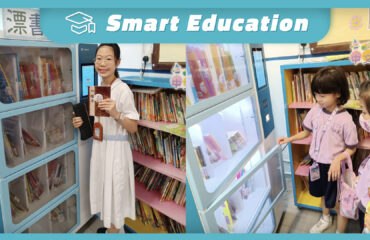
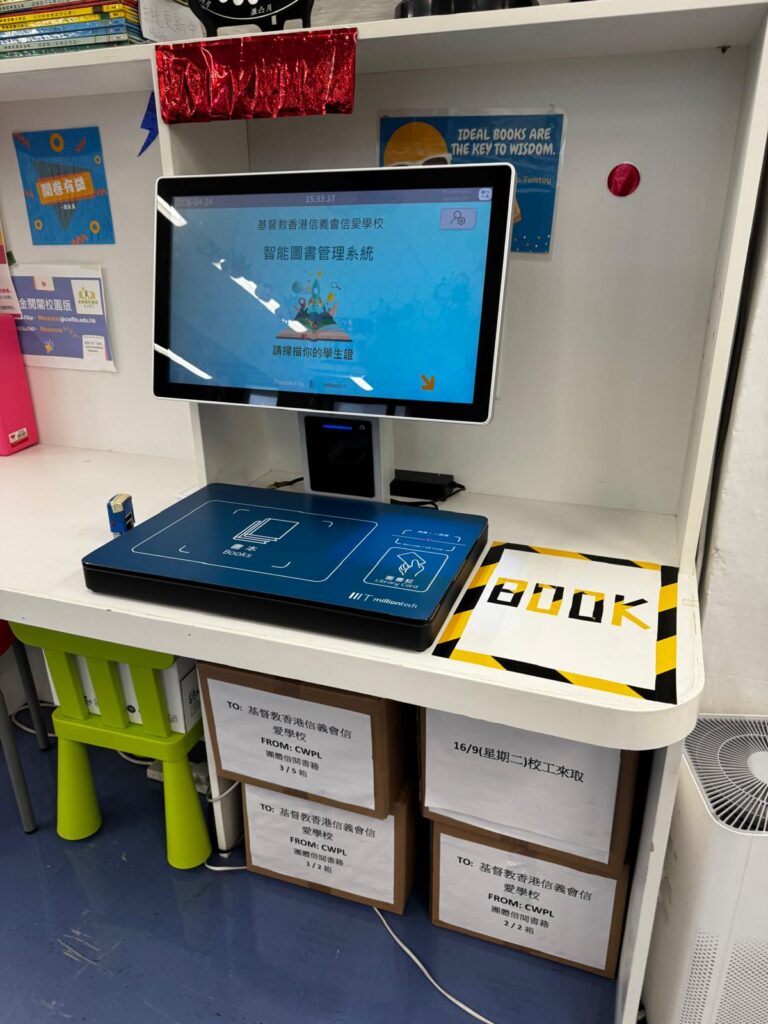
According to the Teacher‑Librarian, the school migrated from the traditional system to Million Tech’s Smart Library and Library GO platform. They successfully transferred over ten thousand library items to the cloud and added cover images for each title, allowing students to log in via mobile phones or tablets anytime to check their current loans and discover new arrivals, thereby boosting their interest in e‑reading.
Teachers make particular use of Library GO’s AI recommendation feature. Students receive personalised reading suggestions based on their interests (for example science, fiction, or English books), while reservation and borrowing data help teachers understand reading preferences across different grade levels and select new books that align more precisely with curriculum themes.
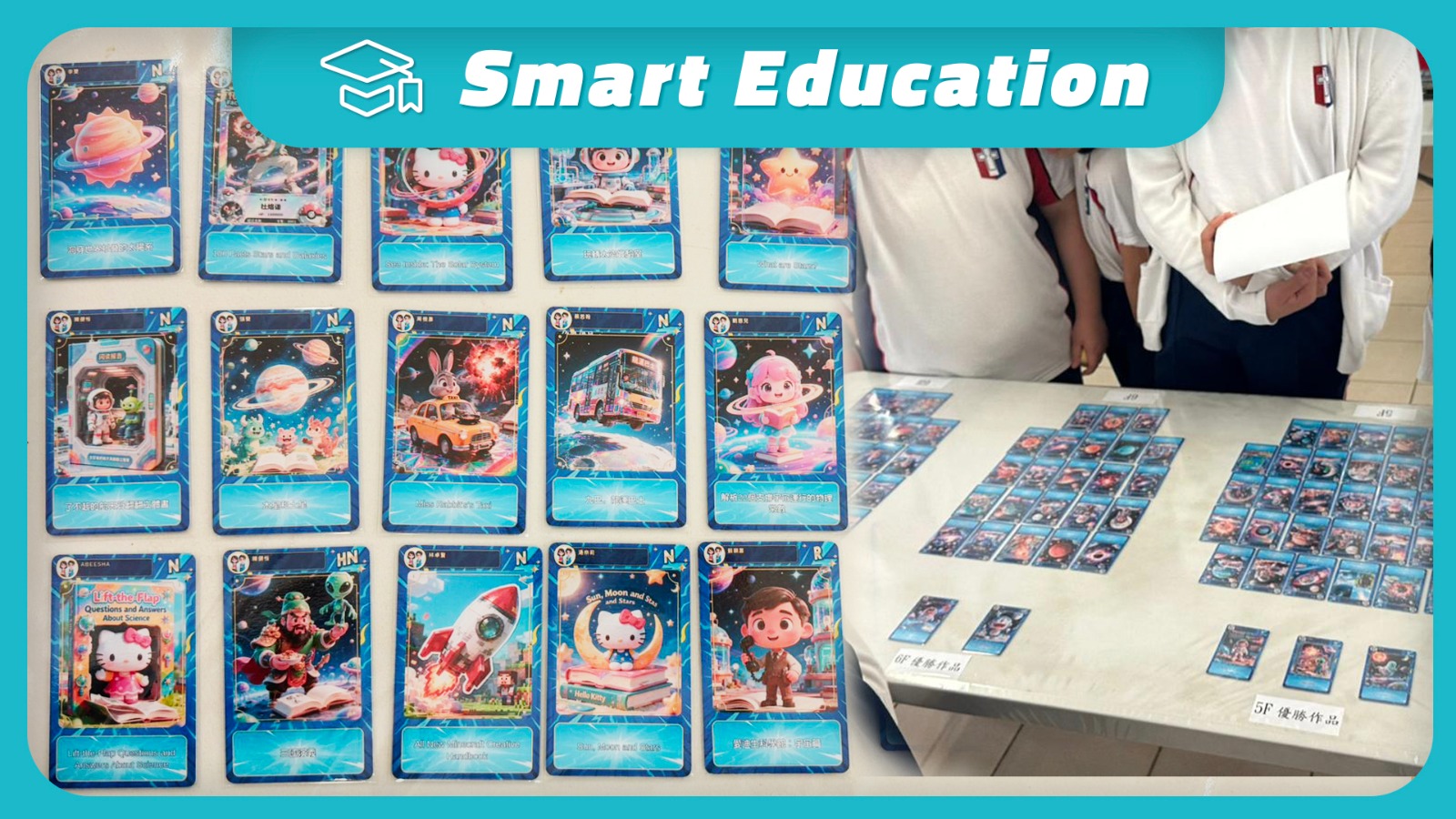
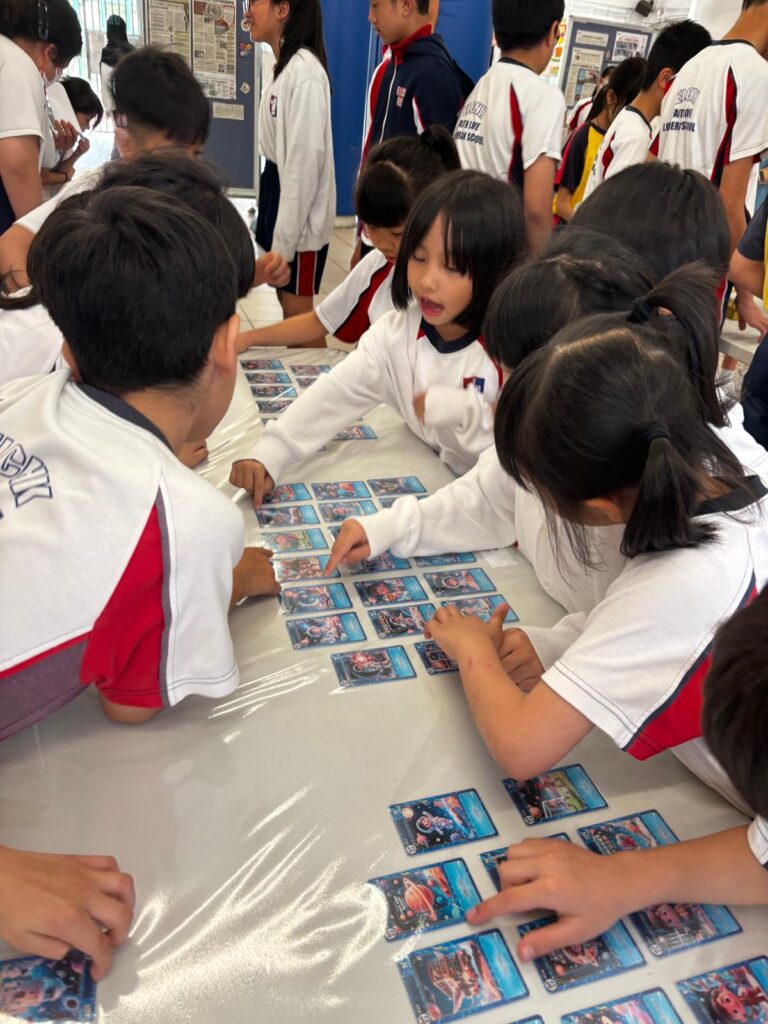
For reading promotion, the school has designed the built‑in “AI Reading Creation Card” as a cross‑curricular activity. Students first borrow and finish reading a book, then input a short reflection or description in Chinese or English as a prompt; the system automatically generates a unique illustrated card, with some works even printed as physical cards. This nurtures students’ reading comprehension, language expression, information literacy, and visual arts design skills, and at the same time greatly increases their motivation to borrow books and write reading reports.
The Teacher‑Librarian also incorporates AI literacy elements into library lessons. They demonstrate how to use the e‑book platform’s AI chatbot, design tools, and multimedia generation tools to support learning, while emphasising that students must not rely on AI to “do homework for them”. Instead, they must build true understanding through “reading, thinking, and writing”, with AI positioned as a learning assistant rather than a replacement.
Result
After introducing the Smart Library and Library GO, students log into the system far more frequently on their own initiative. They actively check new books and reserve titles they want to read, transforming the library from “just a place to borrow and return books” into a regular learning hub in their daily school life. Using system reports, the Teacher‑Librarian regularly analyses borrowing and reservation data and observes a clear increase in the average number of books read per student each month across the whole school. Book selection and reading‑promotion activities can now be aligned more accurately with curriculum themes and values education, further enhancing the utilisation of library resources.
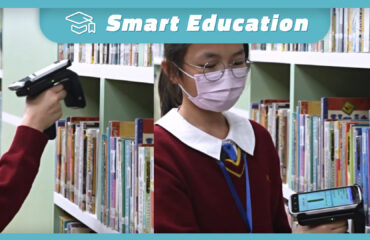
The “AI Reading Creation Card” has successfully brought a collectible “card‑drawing” element into reading activities. Many students are more willing to borrow books, complete reading reports, and write reflections in order to earn their exclusive AI cards, and teachers notice that students now put more effort into the content of their writing, with obvious improvements in reading engagement and writing quality. At the same time, RFID and self‑service circulation have significantly reduced daily time spent on inventory and check‑in/check‑out, allowing library staff to shift their focus from administrative work to reading promotion and AI literacy education, truly moving from traditional library management towards smart reading.