Precision Control in Expressed Breast Milk Safety
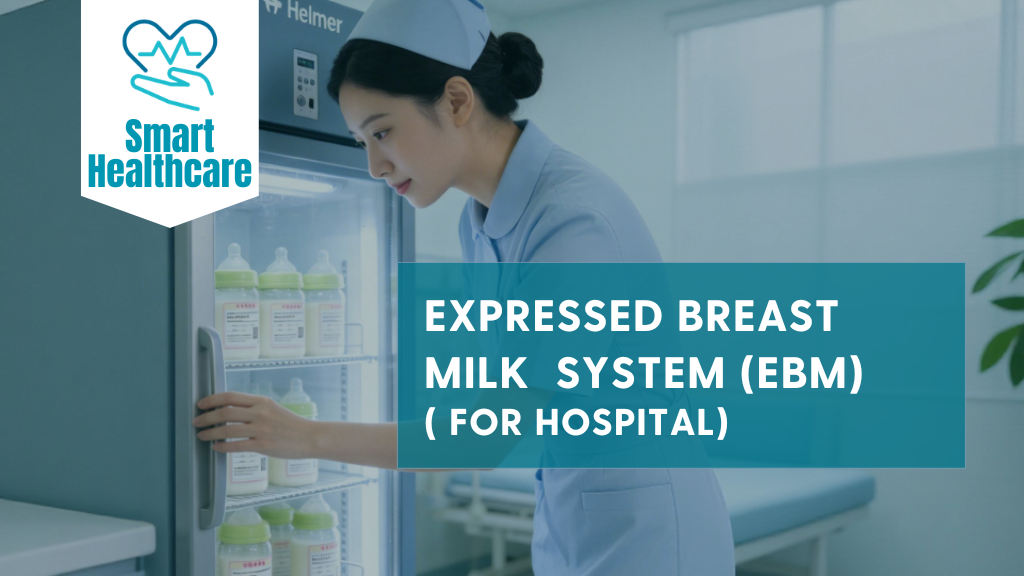
A leading public hospital in Hong Kong partnered with Million Tech to modernize expressed breast milk (EBM) management for neonatal and paediatric patients, resolving key issues in manual labelling, storage tracking, and feeding verification.

Challenges
Previously, the hospital relied on handwritten labels and manual checking inside milk fridges, which was time‑consuming and prone to error. Staff found it difficult to consistently match bottles to the correct baby, confirm collection within 24 hours, and maintain complete records for safety audits.
Solutions
Million Tech introduced a QR code–based EBM Management System that uses the patient’s wristband to generate standardized EBM labels with QR code, patient name and hospital number, following NTWC identification and breastfeeding guidelines. Parents attach these labels to milk bottles, and staff simply scan the QR code and patient identifiers at key steps—receipt, storage and administration—to verify the right milk for the right baby within the valid time window. This connected, scan‑based workflow is part of the hospital’s broader IoMT strategy to strengthen patient safety.


Values created
The QR code system streamlined the entire EBM workflow and significantly reduced manual checking time for nurses. It enhanced identification accuracy, improved traceability through electronic verification records, and strengthened parents’ and clinicians’ confidence in safe, reliable breast milk handling. This data‑driven, IoT‑enabled approach supports safer patient care, easier audits, and more efficient day‑to‑day operations across wards and departments, forming a practical Internet of Medical Things (IoMT) use case in neonatal and paediatric care.
More Success Stories of Smart Healthcare Solution
Million Tech’s smart healthcare and IoT solutions help hospitals digitalize bedside workflows, strengthen patient identification, and standardize clinical processes. They combine barcode, QR code, RFID and IoT technologies to ensure the right patient receives the right care or item at the right time, every time. By replacing manual handwriting and checking with scan‑based verification, connected devices, and electronic records, our systems reduce human error, save nursing time, and enhance end‑to‑end traceability from collection to administration. This data‑driven, IoT‑enabled approach supports safer patient care, easier audits, and more efficient day‑to‑day operations across wards and departments, forming a practical IoMT use case in neonatal and paediatric care.